1. Francisco Alarcon (2018) Crispy Hard, Crispy Fat
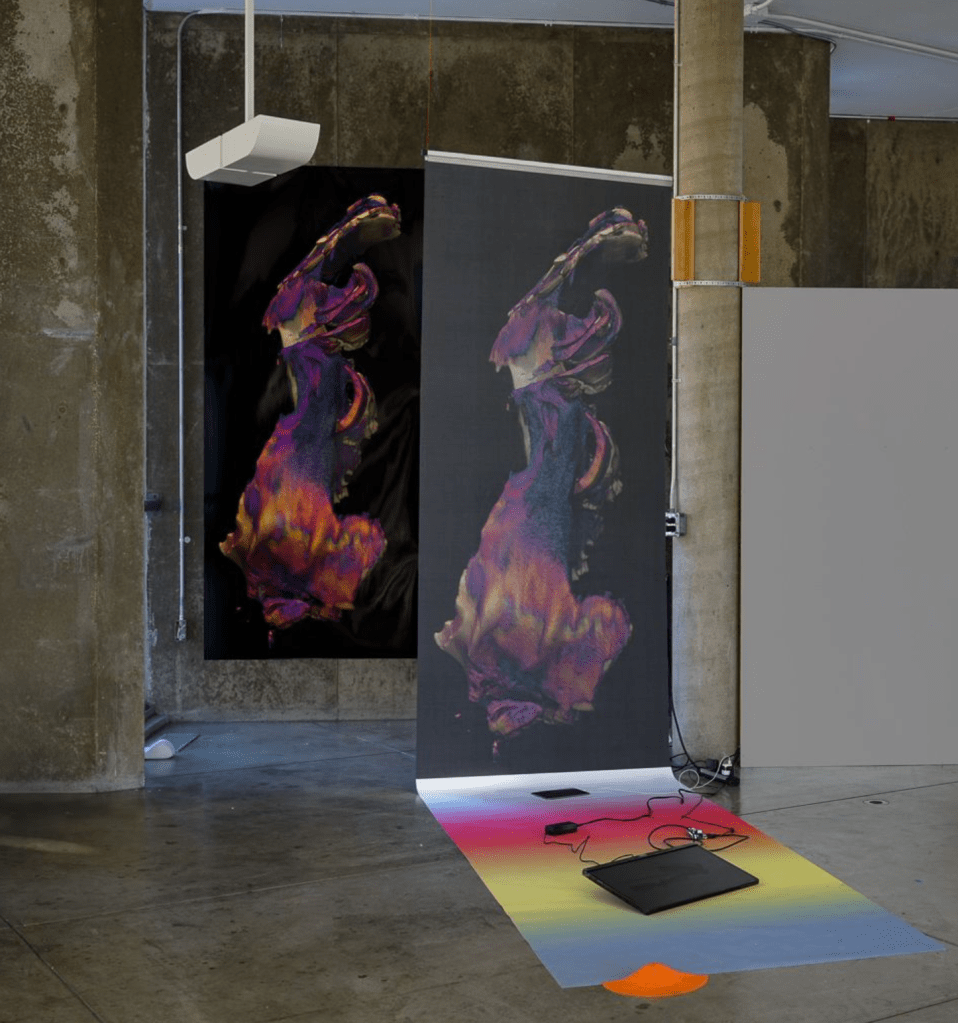
FA: “Crispy Hard, Crispy Fat is an extrapolation of my theoretical interest in materiality into the art studio practice. This project started a few years ago, before I moved to Cambridge, when I was exploring the remediation of surfaces, translating them from analog to digital using imaging tools such as photography, scanners, and 3D modeling software. Later, surfaces—now digital—were transformed into analog by carving a multilayered large acrylic painting with a Computer Numerical Control machine.”
2. Christian Struck (2018) The Materiality of Material (Touching Sounding)

CS: “How do we relate to materials, how do they react to us, especially in their sonic and tactile, i.e., surface properties? Whatever it is, it frames, supports, surrounds, and influences us every day and demands constant attention and deciphering, while at the same time rejecting simple meaningfulness.”
3. Buse Aktas (2018) Dear _________ , will you come with me or shall I come with you?
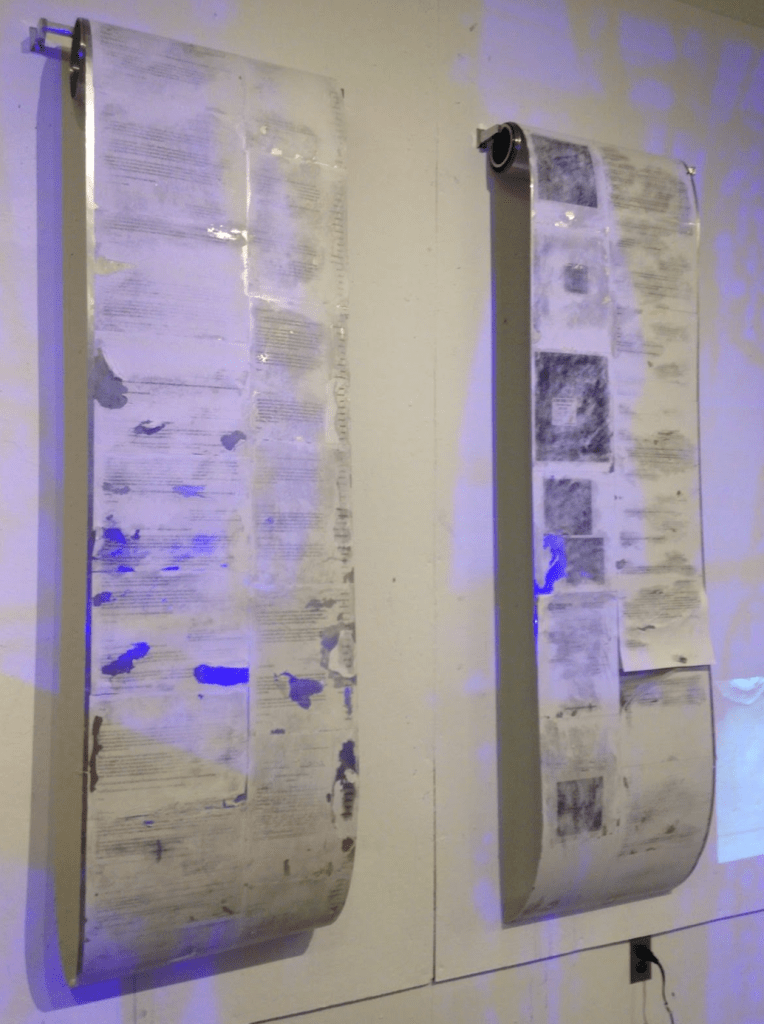
BA: “In what points along the journey of a material’s evolution can we see the vulnerability and fragility of the human condition? Can I – as a researcher developing new structures using existing materials – make and tell stories of these precarious moments, by affect-ively investigating the past, present and future of these materials?”
4. Caleb Hawkins (2019) Becoming Image
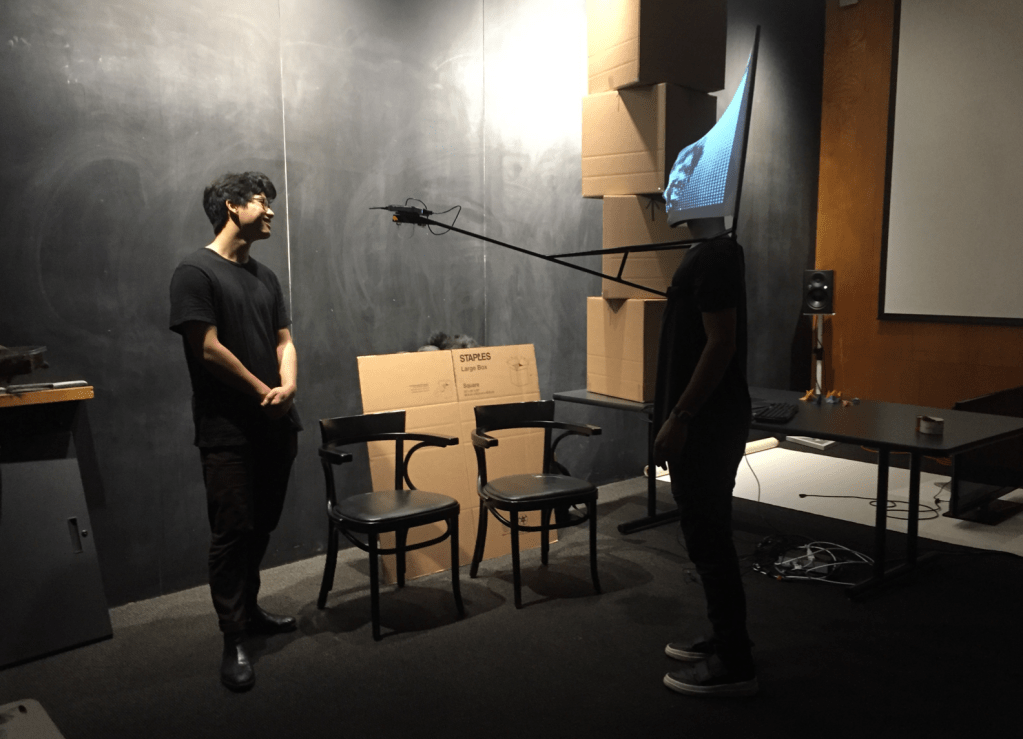
CH: “As an artist, I explore my relationship with technologies of display, interaction and sensing. I look to explore how they affect me, and how I can use them to understand myself in relation to the word. I live a life split between my virtual self, comprised of my data, and the physical world that I sense with my body. I look to investigate the tensions, and synchronicities between these two manifestations of myself. I use various forms of technological mediums to search for, and conceptualize an abstract site located within the act of projection, the limits of the interface, and the extents of the body. I look to study the interface between material surface, light, architectural space, interactive technology, and the self, in an attempt to uncover new embodied perceptions of their relationships.”
5. Francisco Trujillo (2019) Orbiting Cube

FT: “In the next few decades the majority of the current human jobs will be automated. It is a popular belief, even among experts in automation, that jobs involving creativity or insight cannot be automated. Most jobs that have been automated so far involve repetitive physical or computational tasks. Creativity and insight are usually considered uniquely human. But what is creativity? What does it take to have creativity? Can one be creative on-call, as in, can creativity be willingly triggered? Moreover, what is it (if anything) that prevents it from being automated? This project is an open exploration of these questions.”

